Most recent posts:
[instagram-feed]

Most recent posts:
[instagram-feed]
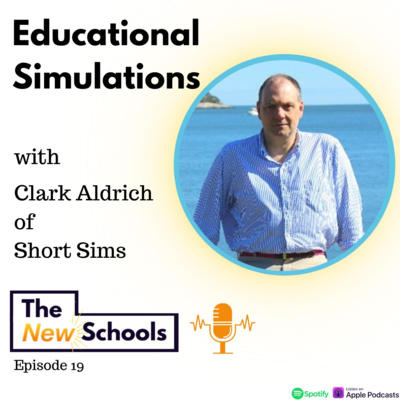
Clark Aldrich has been called a ‘guru’ by Fortune Magazine and a ‘maverick’ by CNN. He and his work in educational media have been featured in hundreds of sources, including CBS, ABC, The New York Times, USA Today, ESPN, AP, Wall Street Journal, NPR, CNET, Business 2.0, BusinessWeek, and U.S. News and World Report. He […]
Clark Aldrich has been called a ‘guru’ by Fortune Magazine and a ‘maverick’ by CNN. He and his work in educational media have been featured in hundreds of sources, including CBS, ABC, The New York Times, USA Today, ESPN, AP, Wall Street Journal, NPR, CNET, Business 2.0, BusinessWeek, and U.S. News and World Report. He has been quoted by President Obama and invited to speak at the Koch brothers’ annual education summit.
Aldrich is the creator of Short Sims, a revolutionary pedagogy that combines the best practices of gamification, microlearning, and traditional conanchtent. Aldrich develops custom Short Sims through, including for Visa, Department of State, Bill & Melinda Gates Foundation, and Center for Army Leadership.
He has degree from Brown University is in cognitive science. Hetrains designers based on his newest book, Short Sims: A Game Changer (April 2020). Clark Aldrich Designs is a boutique education company, founded by Clark Aldrich, which works with corporate, military, and academic clients
He published research, beginning in 1999, outlined the failure of formal education approaches to teach leadership, innovation, and other strategic skills, and then advocated interactive experiences borrowing techniques from current computer games as media to fill these gaps.
Key Takeaways:
02:19 Clark and how he got connected with the Sandefers and Acton.
06:08 Do schools Overcontrol Learners instead of Allowing and Trusting them to go with things?
18:19 What is Short Sims?
40:29 Why should you look for alternative schools?
50:44 Metaphor on Conventional School versus Short SIM
Quotes:
“You want to trust kids as long as possible to pick them up on their own. But at some point do need to guide them towards it.”
“I hope we get to a point where you can take college classes more easily virtually and be on the same fund and only the ones that you want and not the ones that you don’t want and put together your degree.”
“The other thing to recognize increasingly is that entrepreneurship is the new college degree.”
“And it turns out all these important skills that we’re talking about, like leadership, stewardship, relationship, management, innovation, creativity, security- all these are not linear at all.”
“The goal of education is to find out what you’re really good at, find out what you care a lot about, and then figure out how to connect the two.”
“One great way for anyone over 12 or 13 years old, to figure out where their passion is of whom are they envious. It’s one of the great drivers.”
“Everyone needs to stand on the shoulders of giants that came before us. Learn from each other and then just start. It’s an incredibly interesting way of changing ourselves and also changing the world.”
Social Links:
Clark Aldrich
Website – https://www.shortsims.com/
LinkedIn – https://www.linkedin.com/in/clarkaldrich
Twitter – https://twitter.com/clarkaldrich
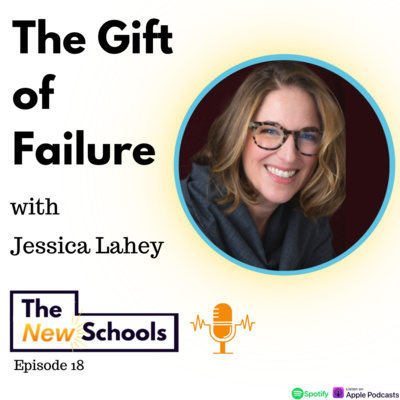
Jessica Lahey is a teacher, writer, and mom. Over twenty years, she’s taught every grade from sixth to twelfth in both public and private schools. She writes about education, parenting, and child welfare for The Atlantic, Vermont Public Radio, The Washington Post and the New York Times and is the author of the New York
Jessica Lahey is a teacher, writer, and mom. Over twenty years, she’s taught every grade from sixth to twelfth in both public and private schools. She writes about education, parenting, and child welfare for The Atlantic, Vermont Public Radio, The Washington Post and the New York Times and is the author of the New York Times bestselling book, The Gift of Failure: How the Best Parents Learn to Let Go So Their Children Can Succeed. She is a member of the Amazon Studios Thought Leader Board and wrote the educational curriculum for Amazon Kids’ The Stinky and Dirty Show. Jessica earned a B.A. in Comparative Literature from the University of Massachusetts and a J.D. with a concentration in juvenile and education law from the University of North Carolina School of Law. She lives in Vermont with her husband and two sons. Her second book, The Addiction Inoculation: Raising Healthy Kids in a Culture of Dependence, will be released in April 2021.
Key Takeaways:
00:25 Her favorite age group of learners to teach and why
07:24 How learning opportunities get lost when parents rescue their children
00:09 The effect of helicopter parenting on motivation and learning
11:01 The red flags about our parenting and teaching that we might need to take a look at
12:50 The difference between directive and autonomy-supportive teaching
17:52 Getting support in non-directive and free-range parenting styles
31:35 What parents should look for in a school
36:00 Her take on self-directed education
42:12 Screentimes and how students are learning differently during COVID
53:26 Building intrinsic motivation
Quotes:
“Kids who have had what’s called autonomy-supportive parenting, teaching, coaching tend to have a little more comfort with frustration, tend to be the kind of kids who can take a breath, figure it out and push through without having to sort of go to someone else for the answer.”
“What is great for learning is frequent formative assessments. It helps the kid exercise a little bit of metacognition, because they’re on a constant basis having to reevaluate what they thought they knew and what they didn’t know.”
“The reason that so many colleges and universities are switching, moving away from lecture-based teaching and towards small group teaching is that we know it works better.”
“There’s all sorts of emotional engagement that has to happen. It’s not just about interpersonal relationships, but engagement and relevance and all that stuff. That’s where the secret sauce of teaching is.”
“Being more controlling of kids has the opposite effect. It undermines their motivation to want to do the things that we’re trying to get them to do. Giving control to kids will help them feel less out of control.”
Social Links:
Download Jessica’s Bibliography: Click Here
Jessica Lahey
Website – https://www.jessicalahey.com/
LinkedIn – https://www.linkedin.com/in/jessica-lahey-b815a366/
Twitter – https://twitter.com/jesslahey
Instagram – https://www.instagram.com/teacherlahey
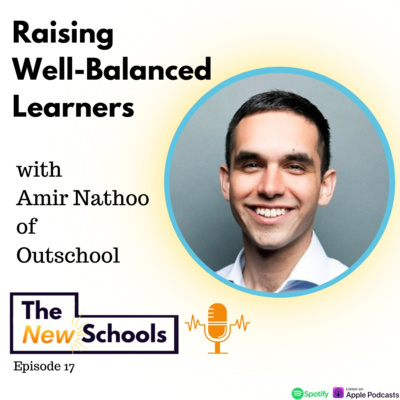
Amir Nathoo is the CEO and Co-founder at Outschool. Outschool is a marketplace for live online classes for K-12 learners. He led the development of Square Payroll and also served as CEO and co-founder of Trigger.io. He holds an MEng in Electrical and Information Sciences from The University of Cambridge and he has a young
Amir Nathoo is the CEO and Co-founder at Outschool. Outschool is a marketplace for live online classes for K-12 learners. He led the development of Square Payroll and also served as CEO and co-founder of Trigger.io.
He holds an MEng in Electrical and Information Sciences from The University of Cambridge and he has a young son.
Key Takeaways:
00:17 Amir’s Elevator Pitch and Motivations Behind Founding Outschool
03:05 Impactful Learning Outside Regular School
05:28 Handling Screentime and Technology
14:44 If you could re-engineer school for the 21st century, what would that look like?
17:59 The Dramatic Impact of the Pandemic on Outschool
32:35 Tips for Parents in Choosing Online Classes
37:59 Amir’s Education and Transportation System Analogy
Quotes:
“I have a strong belief that we can design our interactions with our kids and our family’s lives to handle any challenges.”
“I recognize it’s challenging and all kids are different. So I think we should resist the idea of overgeneralization that we can just come up with a recipe and that this is gonna work for all kids.”
“There’s this word hybrid. And I would say it again and again. Hybrid- combine different modes of learning in order to achieve good balance.”
“The reality is what’s a great class for one kid is not necessarily the best class for another kid. And so the most important thing is to find the perfect class for your kid and find the right group.”
Social Links:
Amir Nathoo
LinkedIn – https://www.linkedin.com/in/amirnathoo/
Outschool
Website – www.outschool.com
Instagram – https://www.instagram.com/outschool/